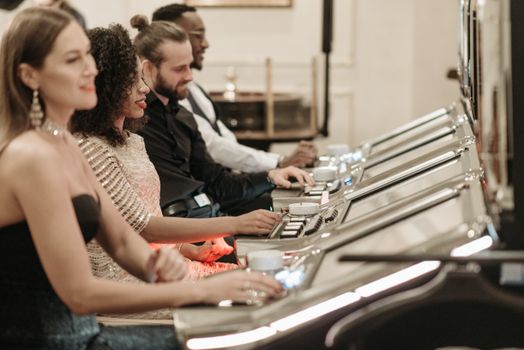
Brazil’s casino industry is experiencing a period of remarkable growth and transformation. Legal developments, digital innovation, and increasing public interest have all contributed to the rapid expansion of gambling options in the country. However, as the industry booms, concerns about the mental health of casino patrons and employees are coming into sharper focus. Internationally, gambling addiction and related mental health issues are well-documented challenges, and Brazil is no exception. This article explores how Brazil’s casino industry is responding to these challenges, the strategies being implemented, and the road ahead for responsible gaming.
The Rise of Casino Gambling and Its Mental Health Implications in Brazil
Since the partial relaxation of gambling laws in recent years, Brazil’s casino sector has grown dramatically. Data from the Brazilian Institute of Responsible Gaming (Instituto Brasileiro de Jogo Responsável) shows that legal gambling revenue surged from approximately R$4.5 billion in 2018 to over R$13 billion in 2023. With an estimated 20 million Brazilians engaging in some form of gambling, the impact on public health is a growing concern.
Gambling addiction, also known as ludomania, is classified as a mental health disorder by the World Health Organization (WHO). Studies indicate that approximately 1-2% of the global population suffers from gambling addiction, with higher rates reported in countries experiencing rapid industry growth. In Brazil, a 2022 study by the Federal University of São Paulo estimated that about 1.3 million Brazilians display signs of problematic gambling behavior.
.png)
The mental health implications are significant. Problem gambling is linked to higher rates of depression, anxiety, substance abuse, and suicide. It also affects families and communities, creating ripple effects beyond the individual gambler. Recognizing these risks, industry leaders, regulators, and mental health professionals in Brazil are taking action.
Casino Industry Initiatives: Promoting Responsible Gambling
Brazil’s leading casino operators are increasingly aware of their responsibility to promote safe and sustainable gaming environments. Many have begun adopting international best practices and tailoring them to Brazil’s unique social and cultural context.
One major initiative is the implementation of responsible gambling programs. These programs typically include:
- Self-exclusion schemes, allowing players to voluntarily ban themselves from casinos. - Limits on betting amounts and gaming session durations. - Clear messaging about the risks of gambling and where to seek help.For example, the Brazilian Association of Casino Operators (Associação Brasileira dos Operadores de Cassino) launched a nationwide campaign in 2023 promoting the slogan “Jogue com Responsabilidade” (“Play Responsibly”). The campaign includes posters in casinos, TV and radio ads, and a dedicated helpline for players seeking support.
Digital casinos have also joined the effort. Many online platforms now utilize AI-driven algorithms to detect problematic betting patterns. When such patterns are identified, players receive pop-up messages encouraging them to take breaks or access support resources.
Mental Health Support for Casino Employees
The mental well-being of casino employees is another critical issue. Dealers, managers, security staff, and other workers are frequently exposed to stressful situations, including witnessing problematic gambling behavior or dealing with distressed patrons.
In response, several major casino groups in Brazil have introduced employee assistance programs (EAPs). These programs provide confidential counseling, stress management workshops, and mental health days. For instance, the Rio Grande Casino Group reported a 30% reduction in employee sick days and a 20% increase in reported job satisfaction after implementing its EAP in 2022.
Training is also a key focus. Casino staff are being taught how to recognize signs of gambling addiction and mental distress, both in themselves and in patrons. The Brazilian Casino Employees Union (Sindicato dos Trabalhadores de Cassinos) now offers annual workshops on mental health awareness, reaching over 5,000 workers in 2023 alone.
Collaborations with Mental Health Organizations
Recognizing that casino operators cannot tackle mental health challenges alone, many are partnering with non-governmental organizations (NGOs), universities, and public health agencies.
One standout example is the partnership between the São Paulo Casino Association and the Federal University of São Paulo. Together, they have developed a research-backed toolkit for identifying and supporting at-risk gamblers. This toolkit is now used in over 70% of licensed casinos in São Paulo state.
Additionally, Brazil’s National Health Service (Sistema Único de Saúde, SUS) has begun integrating gambling addiction screening into its mental health clinics. In 2023, over 15,000 individuals received counseling for gambling-related issues through SUS clinics—a number expected to rise as awareness grows.
Below is a comparison table that highlights the different mental health support mechanisms being implemented in Brazilian casinos versus international best practices:
| Support Mechanism | Brazilian Casinos (2024) | International Best Practice |
|---|---|---|
| Self-exclusion Programs | Available in 80% of major casinos | Mandatory in most EU countries |
| Employee Assistance Programs | Offered by 60% of leading operators | Standard in US/UK casinos |
| AI-driven Player Monitoring | Growing adoption (45% of online platforms) | Widely used in Europe, Australia |
| Partnerships with Mental Health NGOs | Active in major cities | Integrated into regulatory frameworks |
| Public Awareness Campaigns | Nationwide campaigns since 2023 | Longstanding in Canada, UK |
Regulatory Changes and the Path Forward
Legislation plays a vital role in shaping casino industry practices. In 2022, Brazil’s Chamber of Deputies approved Bill PL 442/1991, which paves the way for broader gambling legalization and regulation. The bill includes specific provisions for responsible gambling and mandates that operators allocate a percentage of their revenue to mental health support initiatives.
These regulatory changes are expected to standardize responsible gambling measures across the industry. For example, all licensed casinos will be required to:
- Display helpline information prominently. - Train staff in identifying and responding to problem gambling. - Submit regular reports on gambling-related incidents and interventions.The impact is already being felt. According to the Ministry of Health, reports of individuals seeking help for gambling addiction increased by 27% between 2022 and 2023. While this may seem alarming, experts suggest it reflects growing awareness and improved access to support, rather than a spike in problematic gambling itself.
Looking ahead, Brazil’s experience may become a model for other emerging casino markets in Latin America. The combination of industry-driven action, public health collaboration, and robust regulation is positioning the country as a leader in harm minimization.
Challenges and Opportunities in Addressing Mental Health in Brazil’s Casino Sector
Despite significant progress, challenges remain. Brazil’s vast geography and economic disparities mean that access to mental health and addiction support varies widely. Rural areas, in particular, often lack specialized services, making it harder for at-risk individuals to find help.
Stigma is another barrier. A 2023 survey by Datafolha found that 54% of Brazilians believe gambling addiction is a sign of personal weakness, rather than a medical issue. Overcoming this perception is crucial for encouraging more people to seek assistance.
However, opportunities abound. Advances in telemedicine and digital therapy platforms are beginning to bridge gaps in access. For instance, the “Saúde Digital para Todos” (Digital Health for All) initiative has introduced online counseling sessions for gamblers in remote regions.
Brazil’s youthful population—about 23% are aged 15-29—means there is great potential for effective early intervention and education. Integrating responsible gambling education into schools and universities is being discussed as a preventive strategy.
Final Thoughts on Mental Health and Brazil’s Casino Industry
Brazil’s casino industry is at a crossroads. Rapid expansion has brought economic opportunity and entertainment to millions, but also heightened the risk of mental health challenges. The industry’s growing commitment to responsible gambling, employee well-being, and community partnerships is a promising sign of maturity.
With robust regulation, innovative technology, and a focus on education and prevention, Brazil can mitigate the negative impacts associated with gambling and set a positive example for the region. The journey is ongoing, but the foundations for a healthier and more responsible casino sector are being laid.