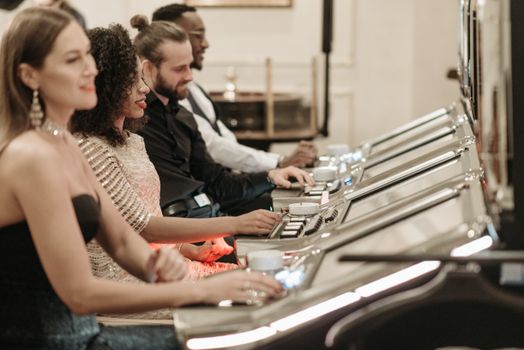
Brazil’s casino industry is at a fascinating crossroads. Once dominated by glamorous, bustling brick-and-mortar establishments, the sector is now experiencing a digital revolution. As internet penetration rises and regulations evolve, online casinos are gaining ground, transforming how Brazilians gamble. The competition between traditional casino halls and their virtual counterparts is reshaping entertainment, business, and even local economies. This article explores the dramatic shift from brick-and-mortar to online casinos in Brazil, examining the factors driving change, how each model compares, regulatory challenges, and what the future might hold.
The Historical Foundation of Brazil’s Casino Industry
To understand the current shift, it’s essential to look back at the history of casinos in Brazil. Brick-and-mortar casinos were once a vibrant part of Brazilian nightlife, especially during the early 20th century. Lavish venues like the Copacabana Palace in Rio de Janeiro drew celebrities and high society, employing thousands and contributing significantly to local economies. However, in 1946, President Eurico Gaspar Dutra banned casinos, forcing over 70 establishments to close overnight and putting approximately 40,000 people out of work.
For decades, Brazil’s casino industry operated in legal limbo. While lotteries and some forms of bingo were permitted, full-scale casino gaming remained off-limits. This void created fertile ground for the emergence of alternative gaming formats and, eventually, for the rise of online gambling platforms.
.png)
The Digital Surge: Online Casinos Take Center Stage
The last decade has seen rapid growth in Brazil’s digital infrastructure. Internet penetration in Brazil reached 83% in 2023, according to the Brazilian Internet Steering Committee (CGI.br), representing over 148 million users. This surge, combined with the proliferation of smartphones—over 242 million in active use—has made online gambling more accessible than ever.
Online casinos offer a wide variety of games, from digital slots and live dealer tables to poker and sports betting. International operators, often licensed in jurisdictions like Malta or Curaçao, have capitalized on Brazil’s regulatory grey areas, attracting millions of Brazilian players. In 2022 alone, estimates suggest Brazilians wagered more than R$12 billion (around USD 2.4 billion) on online gambling platforms.
Rapid transactions, generous bonuses, and 24/7 accessibility are key draws. Players can join a game at home, on public transport, or even during lunch breaks—something unimaginable with traditional casinos. This convenience, coupled with immersive live casino technology, is fundamentally changing how Brazilians engage with gambling.
Comparing Brick-and-Mortar and Online Casinos in Brazil
For all the excitement around online casinos, brick-and-mortar venues still offer experiences that digital platforms cannot fully replicate. To better understand the strengths and weaknesses of each model, consider the following comparative overview:
| Aspect | Brick-and-Mortar Casinos | Online Casinos |
|---|---|---|
| Accessibility | Limited to specific locations | Accessible nationwide, 24/7 |
| Social Experience | High (face-to-face interaction, events) | Low to moderate (chat, live dealers) |
| Game Variety | Hundreds of games, but limited by space | Thousands of games, instant updates |
| Employment Impact | High (staff, security, hospitality) | Lower direct employment, more tech roles |
| Economic Impact | Boosts local economies, tourism | Revenue often flows overseas |
| Regulation | Strict, location-specific | Regulatory grey area, evolving |
| Payout Speed | Immediate (cashier) | Varies (instant to several days) |
Brick-and-mortar casinos provide a unique ambiance—lights, sounds, camaraderie, and live entertainment. They support local jobs and tourism, offering tangible economic benefits to host cities. However, they require large investments, face regulatory restrictions, and are less accessible to the wider population.
Online casinos, in contrast, are borderless and scalable. Their lower operating costs allow for larger bonuses and innovative features. But they lack the social buzz, and regulatory oversight is still catching up, raising concerns about player safety and responsible gambling.
Regulatory Evolution: Navigating a Shifting Legal Landscape
Brazil’s legal framework for gambling is in flux. In December 2023, the Brazilian Senate approved Bill 3626/23, paving the way for the regulation of online betting and casino games. The bill allows for the licensing of both physical and online operators, with taxes set at 18% of gross gaming revenue for online platforms and 17% for physical casinos. These changes are expected to be fully implemented by late 2024.
The government projects that legalizing and taxing online gambling could generate up to R$12 billion (USD 2.4 billion) annually in new tax revenue. This windfall is earmarked for public health, education, and sports. At the same time, brick-and-mortar casino advocates argue that physical venues create more local jobs and infrastructure development.
International operators are watching closely. Some are partnering with Brazilian hotels and resorts in anticipation of a regulated market, blending the best of both worlds—physical venues enhanced by digital platforms.
Consumer Preferences: What Do Brazilians Want?
Understanding why Brazilians are flocking to online casinos requires a look at consumer behavior. According to a 2023 survey by Datafolha, over 30% of respondents reported having gambled online in the past year, with 65% citing convenience as the primary motivator. Other key factors include:
- Variety of games: Online platforms can offer thousands of titles, from classic slots to innovative live dealer experiences. - Promotions and bonuses: 72% of online gamblers said they were attracted by welcome bonuses and ongoing promotions. - Privacy: Many Brazilians appreciate the discretion of online play, avoiding the social stigma that sometimes surrounds gambling.However, there remains a strong appetite for the glamour and spectacle of physical casinos. Special events, live shows, and culinary experiences still hold appeal, particularly for older generations and tourists.
Economic and Social Impacts of the Shift
The migration to online gambling is not without its consequences. While digital platforms are creating new opportunities in IT, marketing, and payment processing, the number of direct jobs is lower compared to large brick-and-mortar casinos. Physical casinos can employ thousands across diverse roles—from dealers and hospitality staff to entertainers and maintenance crews.
There are also concerns about money flowing overseas. Many online casinos serving Brazilians are based abroad, which means a significant portion of revenue leaves the country. By regulating and licensing domestic operators, Brazil hopes to keep more economic benefits at home.
On the social front, online gambling’s anonymity and ease of access can increase risks of addiction, particularly among younger users. Policymakers are responding by mandating responsible gambling tools, age verification, and advertising restrictions for online operators.
The Future of Brazil’s Casino Industry: Hybrid Models and Innovation
Looking ahead, Brazil’s casino industry is likely to embrace hybrid models that combine digital and physical experiences. Integrated resorts, offering casinos alongside hotels, shopping, and entertainment, are expected to anchor major cities and tourist destinations. Many will use advanced technology—such as mobile apps, digital wallets, and loyalty programs—to bridge the gap between in-person and online play.
Virtual reality (VR) and augmented reality (AR) are also on the horizon, promising immersive experiences that blend the excitement of a casino floor with the convenience of home play. For example, VR poker rooms and live-streamed roulette tables are already popular with tech-savvy players in Europe and North America, and Brazilian operators are set to follow suit.
Ultimately, the future will be shaped by consumer demand, regulatory evolution, and technological innovation. Both brick-and-mortar and online casinos have roles to play in Brazil’s gaming renaissance, each offering unique advantages and experiences.