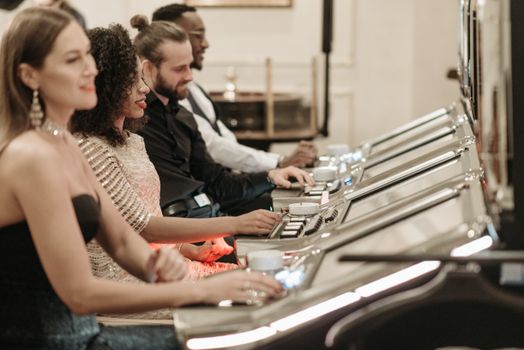
Brazil’s casino industry has undergone a dramatic transformation in recent years, propelled by legislative changes, foreign investment, and evolving social attitudes. As Brazil moves toward a regulated and flourishing gambling market, the country faces a complex web of social implications. From job creation to shifts in family dynamics, urban development to potential social risks, the far-reaching effects of casino growth touch nearly every corner of Brazilian society. This article explores the nuanced social landscape shaped by Brazil’s casino boom, highlighting both the opportunities and the challenges that accompany this new era.
The Evolving Legal Landscape and Social Attitudes Toward Gambling in Brazil
For decades, gambling in Brazil was largely prohibited, with a few exceptions such as state lotteries and horse racing. However, the tide began to turn in the late 2010s as lawmakers recognized the economic potential of legalizing and regulating casinos. In 2022, the Chamber of Deputies approved a bill to legalize gambling, paving the way for a regulated casino market that could generate an estimated R$20 billion (around $4 billion USD) in annual tax revenue.
This shift in policy reflects changing social attitudes. According to a 2023 survey by Datafolha, 56% of Brazilians now support regulated casino gambling, up from 41% a decade earlier. The growing acceptance is driven by perceptions of economic benefit, increased entertainment options, and the potential for international tourism. However, a significant minority still express concern over possible social harms, including addiction and crime.
.png)
Economic Uplift: Job Creation and Urban Transformation
One of the most visible social impacts of Brazil’s casino growth is the creation of new jobs and the revitalization of urban spaces. The Brazilian Institute of Geography and Statistics (IBGE) estimates that legal casinos could directly employ over 200,000 people nationwide within five years of full legalization. These roles span hospitality, security, entertainment, management, and more.
Cities such as Rio de Janeiro and São Paulo are already seeing the early effects of casino-driven urban development. The inauguration of high-profile resorts has spurred infrastructure upgrades, including public transportation, road improvements, and expanded public services. Casino complexes often act as anchors for broader entertainment districts, attracting restaurants, theaters, shopping centers, and even residential developments.
The table below compares the projected economic impact of casino legalization in Brazil with similar data from two other major casino markets, Las Vegas (USA) and Macau (China):
| Region | Annual Casino Revenue (USD) | Direct Employment | Tourism Increase (%) |
|---|---|---|---|
| Brazil (projected) | $4 billion | 200,000+ | +15% |
| Las Vegas | $6.5 billion | 180,000 | +20% |
| Macau | $36 billion | 83,500 | +30% |
While Brazil’s market is still emerging, the figures suggest significant potential for employment and urban regeneration, especially in cities with existing tourism infrastructure.
Family and Community Dynamics: Shifting Social Patterns
The arrival of legal casinos brings new patterns to family and community life. On one hand, casino resorts offer family-friendly entertainment, fine dining, and cultural events, making them appealing destinations for leisure and social gatherings. On the other hand, concerns linger regarding the impact on household finances and relationships.
Research from the University of São Paulo found that in regions where gambling is newly legalized, 12% of families reported increased leisure activity, but 7% noted increased tension over finances. Community organizations are responding by promoting financial literacy and responsible gaming awareness, aiming to help families navigate this changing landscape.
Casinos can also foster a sense of local pride and community engagement. Many resort operators invest in local arts, sponsor festivals, and support charitable initiatives. For example, a casino in Salvador has partnered with local schools to fund arts education programs, benefitting more than 3,000 students annually.
Socioeconomic Risks: Addressing Problem Gambling and Inequality
Despite the positive economic and social effects, the expansion of Brazil’s casino industry raises concerns about problem gambling and widening social inequality. The World Health Organization estimates that 2-3% of adults in countries with legalized gambling develop problematic gaming behaviors. In Brazil, that could translate to nearly 4.2 million individuals at risk.
Vulnerable populations, such as low-income families and young adults, are particularly susceptible. Without effective safeguards, casinos could exacerbate cycles of debt, family discord, and mental health issues. The government has responded with regulatory measures, including mandatory self-exclusion programs, funding for addiction treatment, and limits on advertising.
Additionally, critics argue that the benefits of casino development often accrue to wealthier urban centers, potentially deepening regional disparities. Rural communities may see little of the economic uplift, while shouldering some of the social costs.
Cultural Shifts: Changing Perceptions of Leisure and Morality
The growth of Brazil’s casino industry is also transforming cultural norms around leisure, risk-taking, and morality. Once stigmatized, gambling has begun to shed its taboo status, becoming integrated into mainstream entertainment. This shift is visible in popular media, with casino themes appearing in television shows, films, and music.
According to a 2024 Ipsos poll, 61% of Brazilian adults now view casino visits as “normal leisure activity,” compared to just 38% in 2015. This normalization has ripple effects across society, influencing everything from social gatherings to the design of urban spaces. New casino resorts often feature theaters, art installations, and culinary experiences, blurring the lines between gambling and cultural consumption.
However, this cultural transformation is not without controversy. Religious groups and conservative organizations continue to voice opposition, citing concerns over morality, social cohesion, and the erosion of traditional values.
Public Safety and Crime: Realities Versus Perceptions
A central point of debate surrounding the casino boom is its impact on public safety and crime rates. Opponents of casino legalization often cite fears of increased organized crime, money laundering, and street-level offenses. However, international studies offer a more nuanced picture.
A 2023 report by the United Nations Office on Drugs and Crime (UNODC) found that while casino hubs can experience short-term increases in certain crimes (such as petty theft or fraud), the effect diminishes with proper regulation and law enforcement. In Macau, for example, crime increased by 14% in the first year of casino expansion, but stabilized once security protocols and surveillance systems were implemented.
In Brazil, early data from pilot casino projects indicates no significant spike in crime rates. Instead, investments in surveillance, police training, and community outreach are helping to maintain public safety. The government requires all licensed casinos to implement advanced security measures, including facial recognition and real-time monitoring.
Final Reflections: Charting Brazil’s Social Future Amid Casino Growth
The growth of Brazil’s casino industry is reshaping the nation’s social fabric in profound ways. While the industry offers undeniable economic benefits—job creation, urban renewal, and increased tourism—it also presents challenges related to addiction, inequality, and cultural change. The key to harnessing the positive potential of this industry lies in robust regulation, social investment, and ongoing public dialogue.
Brazil stands at a crossroads, with the opportunity to build a casino sector that supports not only economic development but also social well-being and cultural vibrancy. By learning from international examples and prioritizing the needs of all citizens, Brazil can create a gaming industry that’s both prosperous and socially responsible.